 USD
USD


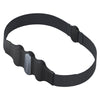

When we launched our first-generation wearable power kit, the Carina C1, the initial wave of feedback from the smart glasses community was exhilarating. Seeing content creators, tech enthusiasts, and daily wearers finally break free from the constant "dock-and-pause" cycle of the standard charging case validated everything we were fighting for. For the first time, users could truly push their frames to the limit.
But as the months rolled on, our customer support inbox, community forums, and review pages began telling a more nuanced story. While the majority of our users were having a fantastic experience, a small but significant percentage ran into unexpected hardware frictions.
At PrismXR, "good enough" is a failure. We don't ignore data points just because they don't fit a perfect narrative. Instead, we pulled our engineering team into a room, mapped out every single piece of real-world user data, and made a definitive choice: we were going to completely tear down our original design and rebuild our flagship power system from scratch.
It brings me back to my time at Anker and Soundcore, where we learned firsthand that tiny, premium wearables are often the most brutally challenging products on earth to build. When your goal is to make a product completely invisible, you have to fight for fractions of a millimeter. The Carina C2 is the result of that obsession—a relentless pursuit to find the perfect, impossible balance between advanced features, all-day comfort, and iconic style.
Here is the transparent, behind-the-scenes story of how we analyzed our flaws, poured more R&D resources into this tiny device than any product in our history, and patented a whole new way to power spatial computing.
The Diagnostics: What the Data Taught Us
Engineering a power accessory for a device as tightly optimized as a pair of smart glasses is an exercise in extreme precision. Unlike traditional consumer electronics, smart eyewear has no physical ports. They rely entirely on proprietary, microscopic magnetic contact pins built into the frames.
When we analyzed our post-launch internal quality data, we discovered a few hidden mechanical and electrical bottlenecks that only emerged after weeks of real-world wear:
- Charging Interruptions (16.7% of reported issues): Users reported that the battery module would occasionally charge unstably or experience a sudden voltage drop that halted power delivery.
- Wearer Comfort & Fit (10% of reported issues): The original nose-mount profile, while ultra-slim by industry standards, occasionally caused structural rubbing or micro-irritations on certain facial structures during heavy, all-day active use.
- Mechanical Strain (7% of reported issues): The structural shrapnel brackets on the temple arms were absorbing an intense level of stress during rapid, repetitive snapping and unsnapping, leading to localized wear over long periods.
We didn’t see this data as a setback. We saw it as an exact engineering checklist for perfection.

Carina C2 Charging Kit for Ray-Ban Meta Glasses
1. Cracking the Smart Glasses Power Code: Our Patented Smart Algorithm

One of our biggest technical breakthroughs came when we realized that charging a pair of advanced smart glasses is absolutely nothing like charging a smartphone. Smart glasses run sophisticated, background-heavy operating systems that power open-ear audio, camera sensors, and continuous AI interactions all at once. Because of this, the frames experience sudden, violent spikes in peak current draw. On standard charging architectures—including our first-generation hardware—these erratic current drops would occasionally confuse the charging safety logic, causing the power transfer to abruptly disconnect and fail to resume automatically.
To solve this permanently, we designed an all-new internal smart chip and wrote a custom charging protocol from the ground up. The Carina C2 Smart Algorithm features two key mechanisms:
- Active Proactive Detection: The C2 doesn’t just sit passively. It constantly monitors the frames' power state. The moment it detects that the glasses require power, it actively initiates and stabilizes the handshake to force continuous charging.
- Dynamic Current Modulation: The chip intelligently throttles and adjusts incoming current in real time. If your glasses hit a heavy processing load or a thermal spike, the C2 dynamically adapts the current flow to protect your smart frames' delicate internal battery health while maintaining an uninterrupted charge.
The Result: You will never have to double-check if your glasses are actually charging again. You snap the module on, and it delivers rock-solid, optimized power until the battery cells are completely drawn down. We are incredibly proud to say this technology is officially patented. 😉
2. The 0.1mm Chess Match: Shaving the Profile by 40%
Fixing the electrical architecture was only half the battle. Next, we had to address the physical reality of wearing technology directly on your face.
To eliminate the nose-bridge friction reported by our initial users, we set out to make the nose mount significantly thinner without sacrificing an ounce of structural integrity. This turned into a grueling, month-long design sprint where our R&D team adjusted tooling measurements by microscopic fractions.
| Specification | Carina C1 | Carina C2 (Upgraded) |
| Single Battery Capacity | 145 mAh | 220 mAh (Massive Leap) |
| Total System Capacity | 965 mAh | 1115 mAh |
| Max Extra Runtime (Gen 2 Frames) | Up to 16 Hours | Up to 19 Hours |
| Nose Mount Physical Footprint | Original Design | 40% Thinner (Ultra-Comfort) |
| Charging Intelligence | Standard Charging | Patented Smart Algorithm |
| Magnetic Cable Configuration | Included in Box | Sold Separat |
We systematically tuned the dimensions, shaving thicknesses down by precise 0.1 mm increments and testing structural strength variation down to 0.1 grams.
Once we found the mathematical sweet spot, we didn't just rush to the factory lines. We manufactured a dedicated run of test production units and sent them directly to our most critical beta users—the very customers who had reached out with C1 comfort issues. Only after they confirmed that the new design felt virtually weightless and completely eliminated the old pressure points did we lock in our final production tooling.
3. Embracing True Modular Freedom

Every design change we made for the Carina C2 was focused on optimization. By bumping the single-battery capacity from 145 mAh all the way to 220 mAh, we managed to expand total system capability up to an incredible 19 hours of total extra runtime.
We also listened to how our community structured their daily gear. While our first-generation kit bundled every single piece of hardware together, the Carina C2 shifts to a streamlined, hyper-focused modular layout. The core premium kit focuses entirely on maximizing your wearable uptime with our upgraded high-capacity batteries and charging case, while the external magnetic charging cable is now offered separately. This keeps the entry point highly efficient and lets you customize your spatial power layout exactly how you use it.
The Journey Doesn’t End Here
Building hardware is hard. Building custom-fit hardware for the world’s most advanced smart eyewear is a constant tightrope walk between physics, aesthetics, and human anatomy.
The Carina C2 exists because we refused to look away from our community's real-world complaints. It is lighter, faster, smarter, and significantly more comfortable than anything we have ever built before. We can’t wait for you to experience what happens when engineering transparently answers the call of its users.
Stay powered,
Richard Founder, PrismXR
Carina C2 Charging Kit for Ray-Ban Meta Glasses